Affiliate disclosure: Cross Stitch Expo may earn a commission from qualifying purchases made through links on this page, at no additional cost to you. How we choose what we feature.
A cross-stitch kit can be one of the easiest ways to begin a project.
Instead of buying the pattern, fabric and every thread separately, the major components are gathered for one design.
But not every kit contains exactly the same things.
So before buying, look beyond the cover image.
 The Quick Answer
A useful cross-stitch kit should clearly tell you:
- what design you are making,
- the finished size,
- the difficulty level if one is provided,
- what fabric is included,
- what threads are included,
- whether a needle is included,
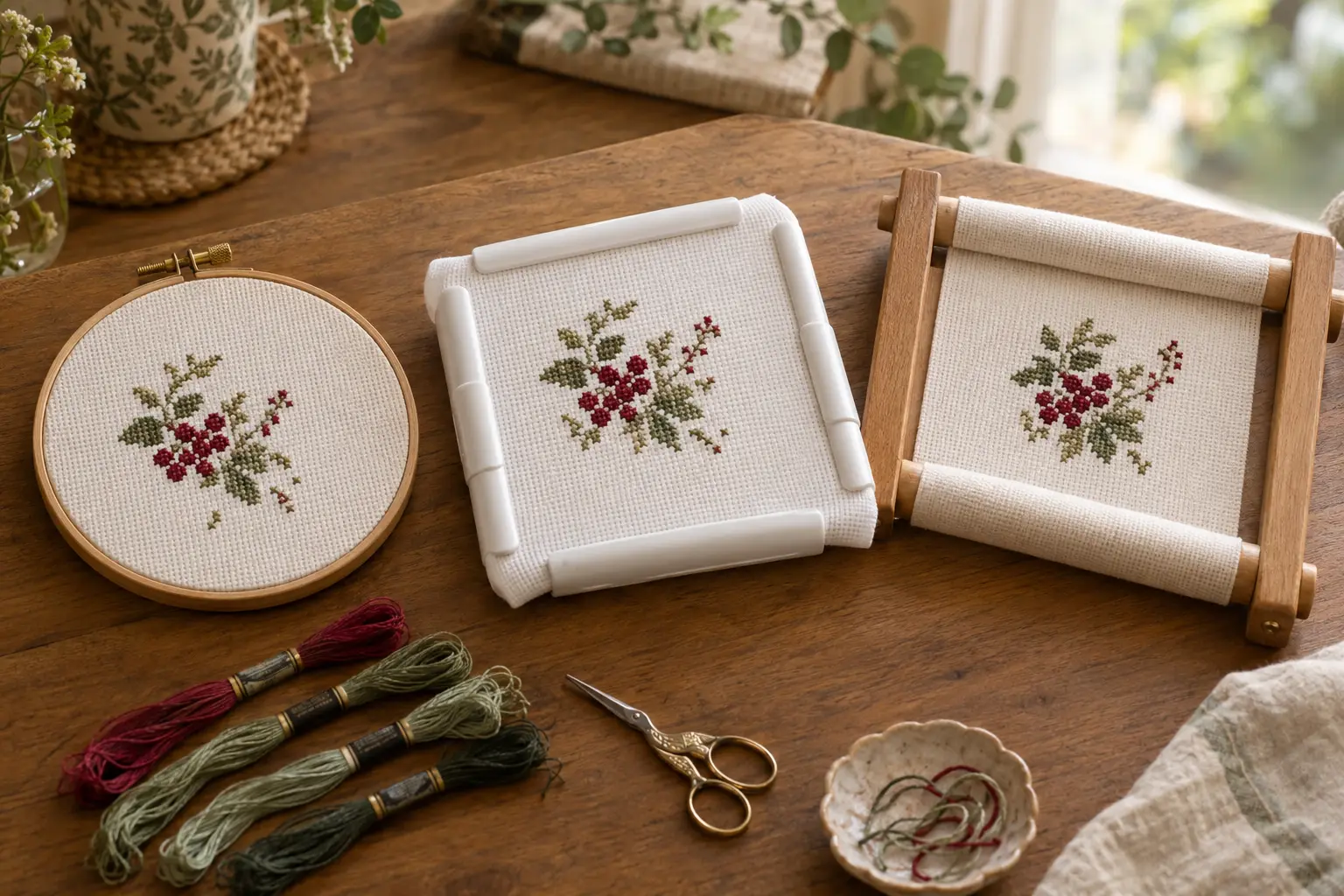
- whether a hoop or frame is included,
- and what instructions or chart are supplied.
DMC’s current kit range, for example, says its kits include fabric, thread, a needle and a hoop or frame, although individual product contents can differ.
Always read the individual product description.
 What Should Be Inside?
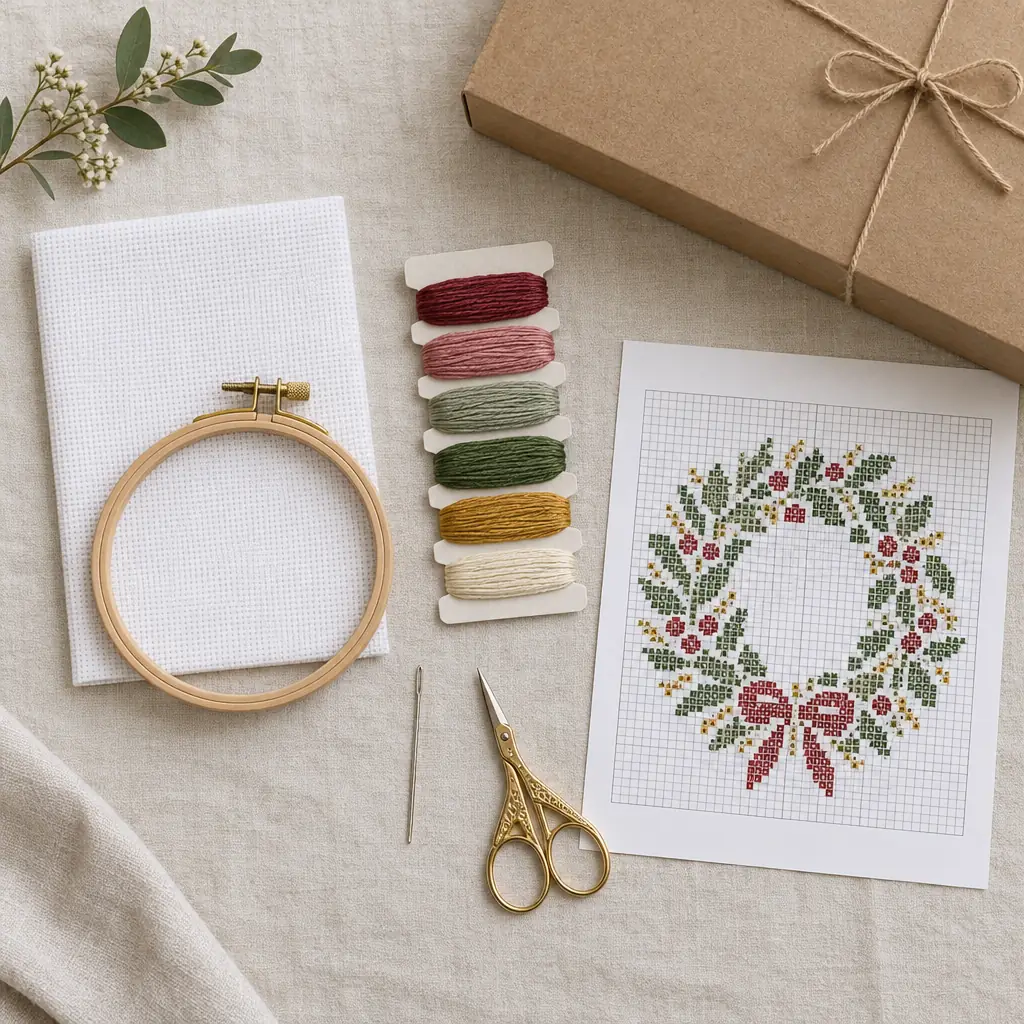
A typical cross-stitch kit may contain:
- Pattern or chart
- Fabric
- Embroidery floss
- Needle
- Instructions
Some also include:
- Hoop
- Frame
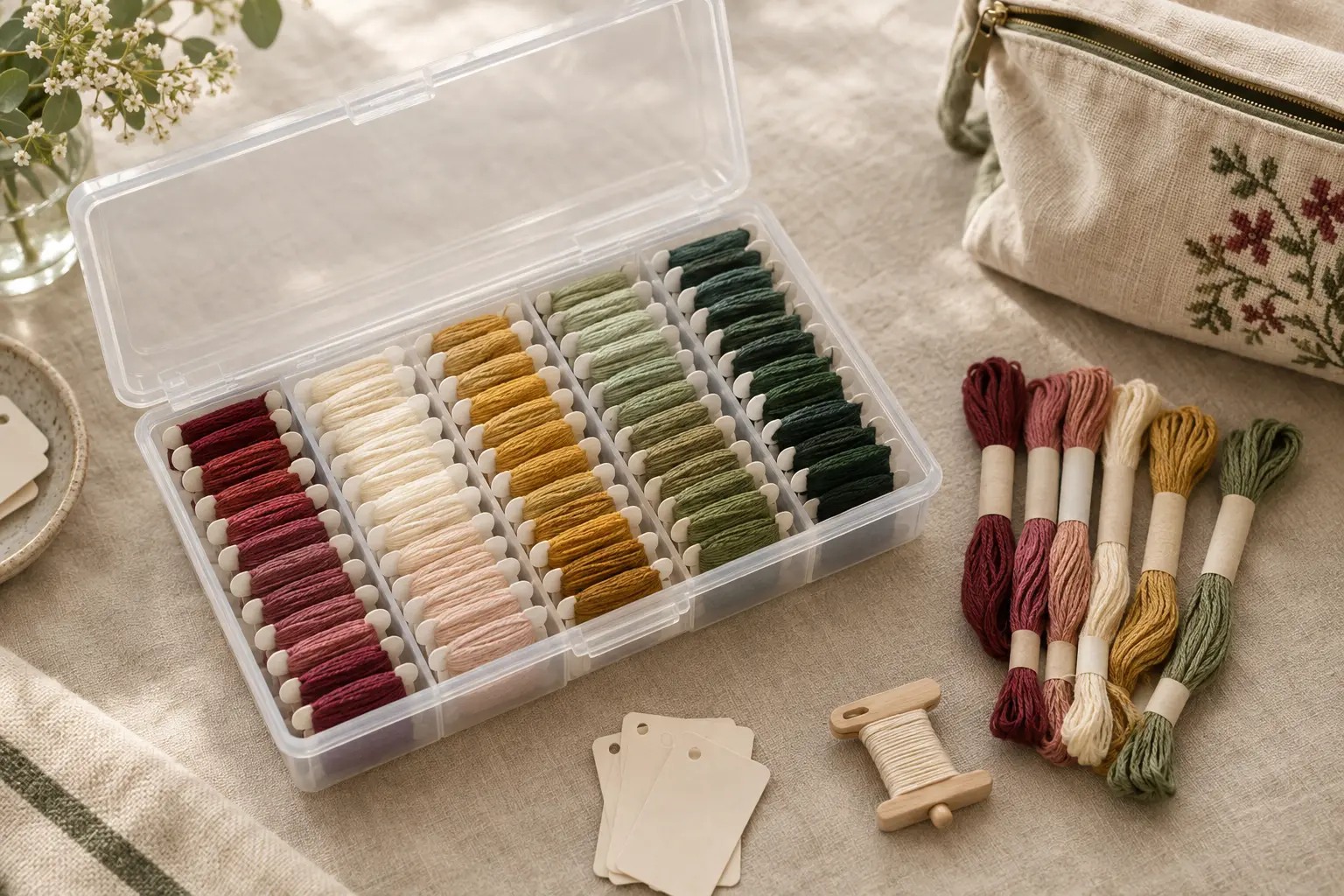
- Thread organizer
- Finishing materials
DMC’s individual cross-stitch kits show how contents can vary: one current kit includes 14-count Aida, floss, a hoop, needle and instructions, while another includes Aida, floss, needle and instructions without a hoop.
That is why “kit” should never be assumed to mean “absolutely everything.”
 Check the Fabric
Look for:
- fabric type,
- fabric count,
- fabric color,
- and dimensions.
If you’re a beginner, 14-count Aida can be particularly approachable.
If the kit uses linen, dark fabric or a much higher count, make sure that is an experience you actually want.
 Check the Threads
Ask:
Are the threads included?
Are they identified by color numbers?
Are they pre-sorted?
Is enough thread supplied?
Are specialty fibers included?
Higher-quality kits usually make it reasonably clear what you’re getting.
A thread organizer can be particularly useful in kits containing many colors.
 Check the Chart
You may not be able to inspect the entire chart before purchasing—and shouldn’t expect publishers to display their complete copyrighted pattern publicly.
But the product information should ideally tell you whether it is:
- printed,
- digital,
- black-and-white symbol,
- color symbol,
- or some combination.
If you have accessibility preferences, investigate before buying.
 Look at Difficulty Carefully
Terms such as:
- Beginner
- Easy
- Intermediate
- Advanced
are useful, but they are not standardized across every company.
Read the details.
A pattern might be considered intermediate because of:
- many colors,
- specialty stitches,
- large size,
- fine fabric,
- or complex backstitch.
Knowing why something is harder is more useful than the label alone.
 Look at Finished Size
A product photograph can be deceptive.
Check the actual finished dimensions.
That tells you whether the completed project is:
- a tiny ornament,
- a small hoop,
- a medium wall piece,
- or a major long-term project.
Printed Fabric vs Counted Cross Stitch
Some kits use preprinted or stamped fabric.
Others use a counted chart with unprinted fabric.
These are different stitching experiences.
Neither is automatically superior.
Make sure you’re purchasing the one you actually want.
 Consider the Designer
A kit is also an opportunity to discover a designer.
Look for information about who created the artwork or pattern.
Cross Stitch Expo strongly favors clear attribution because knowing the maker helps stitchers discover more work they may enjoy.
Is a Kit Good Value?
Don’t judge only by the cost of raw materials.
A kit may also include:
- pattern licensing,
- design work,
- thread sorting,
- instructions,
- packaging,
- specialty components,
- and convenience.
The better question is:
Does this kit contain what I need, at a quality I am comfortable using, for a design I genuinely want to stitch?
Beginner Kit Checklist
Before buying, confirm:
- Pattern/chart included
- Fabric included
- Fabric count
- Thread included
- Needle included
- Hoop/frame included or not
- Finished size
- Stitch types
- Difficulty
- Instructions
- Any additional materials required
Then you’ll know whether the box truly gets you ready to stitch.
 What to Learn Next
- How to Choose Your First Cross Stitch Pattern
- Cross Stitch Supplies for Beginners
- Cross Stitch Fabric Counts Explained
- How to Read a Cross Stitch Chart
A well-designed kit removes decisions.
It should make starting simpler—not create new questions after you open the package.