Affiliate disclosure: Cross Stitch Expo may earn a commission from qualifying purchases made through links on this page, at no additional cost to you. How we choose what we feature.
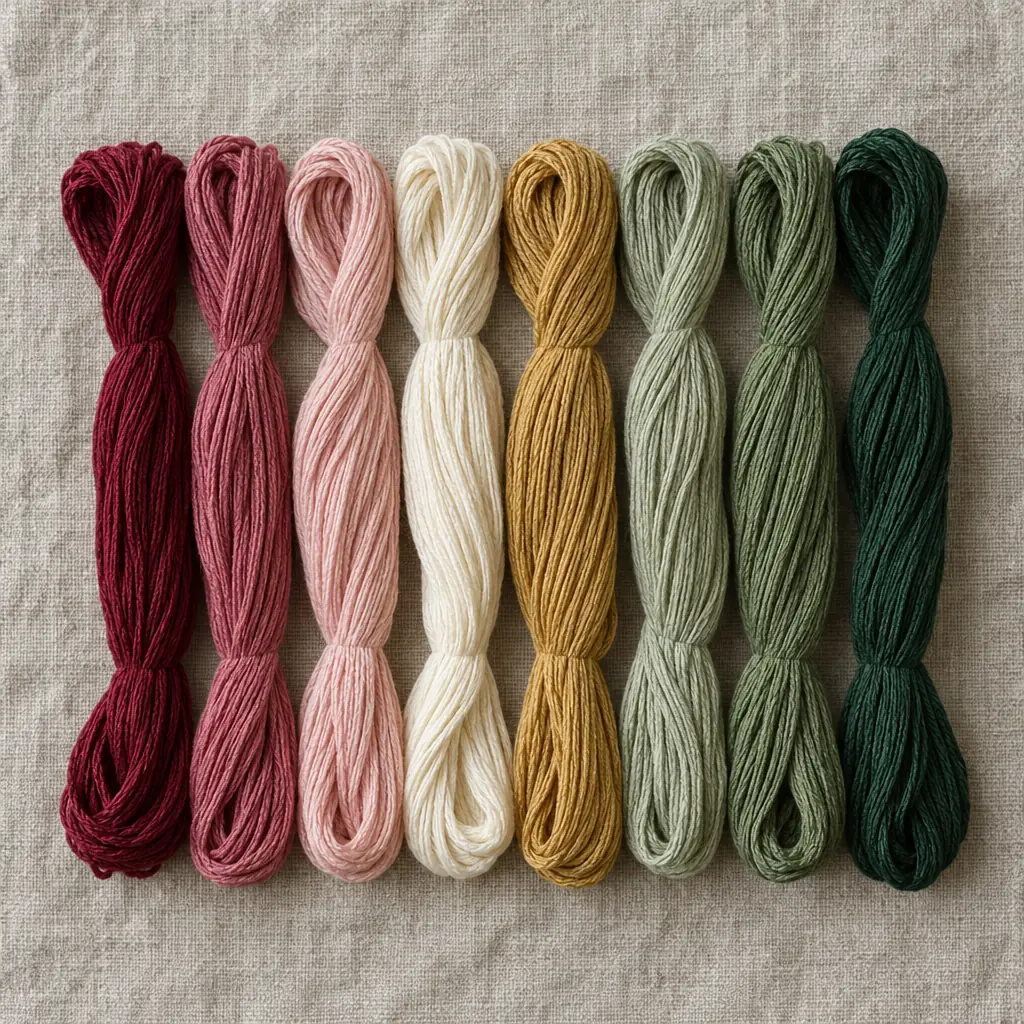
Open a skein of embroidery floss and you’ll discover something that confuses many first-time stitchers:
The thread you bought is actually made from several smaller strands.
Standard stranded embroidery floss is designed to be separated before stitching. DMC’s familiar cotton embroidery floss contains six individual strands, and DMC specifically notes that stitchers will not normally use all six at once.
So how many should you use?
 The Quick Answer
Always check your pattern first.
If the designer specifies two strands, use two unless you intentionally want to alter the appearance.
When no specific instruction is available, a common starting point for full cross stitches is:
| Fabric | Common starting point |
|---|---|
| 11-count Aida | 3 strands |
| 14-count Aida | 2 strands |
| 16-count Aida | 2 strands |
| 18-count Aida | 1–2 strands |
| 28-count over two | 2 strands |
| 32-count over two | 1–2 strands |
| 36-count over two | 1–2 strands |
These are conventions rather than fixed rules. Coverage varies with thread, fabric color, tension and personal preference.
 What Does “Two Strands” Mean?
A normal skein contains six strands twisted together.
If your pattern says:
Use two strands
it usually means:
Cut a working length.
Separate the strands.
Take two individual strands.
Recombine them.
Thread those two through your needle.
Do not simply cut the six-strand floss and stitch with the whole bundle.
Why Does Strand Count Matter?
The number of strands affects:
Coverage
More strands generally cover more of the fabric beneath the X.
Texture
More thread creates a fuller, heavier stitch.
Ease of stitching
Too much thread can crowd small fabric holes.
Finished appearance
Some stitchers prefer a very full X.
Others enjoy seeing a small amount of fabric between stitches.
Neither preference is inherently wrong.
Two Strands on 14-Count Aida
Two strands are a very common combination on 14-count Aida.
It gives many designs comfortable coverage without making each hole excessively crowded.
That’s why this combination appears so frequently in beginner recommendations.
 What About Dark Fabric?
Dark fabric can make gaps between stitches more noticeable.
Some stitchers increase the number of strands when they want fuller coverage.
Before making that change across an entire project, create a few test stitches.
Compare:
- two strands,
- three strands,
- and your pattern’s recommendation.
Then choose deliberately.
 What About Backstitch?
Backstitch frequently uses fewer strands than full crosses.
Many patterns use one strand for outlines because it creates a finer line.
But again:
follow the pattern key.
A designer may intentionally use different thread weights to create stronger or softer lines.
Specialty Threads
Metallics, wool, silk and other specialty fibers don’t necessarily behave like ordinary six-strand cotton floss.
Never assume that the same strand rule applies.
Follow the manufacturer’s or designer’s recommendation whenever possible.
 The Loop-Start Question
If you use a loop start, two strands can be created from one long strand folded in half.
The folded loop becomes the starting anchor.
That can make two-strand stitching especially convenient.
But make sure the technique is appropriate for your thread and the visual effect you’re trying to achieve.
How Long Should Your Floss Be?
More isn’t always better.
DMC warns that thread that is too long can become worn, frayed or dirty from repeated handling and recommends roughly fingertip-to-elbow length as a practical general starting point.
Shorter working lengths can also make specialty threads easier to manage.
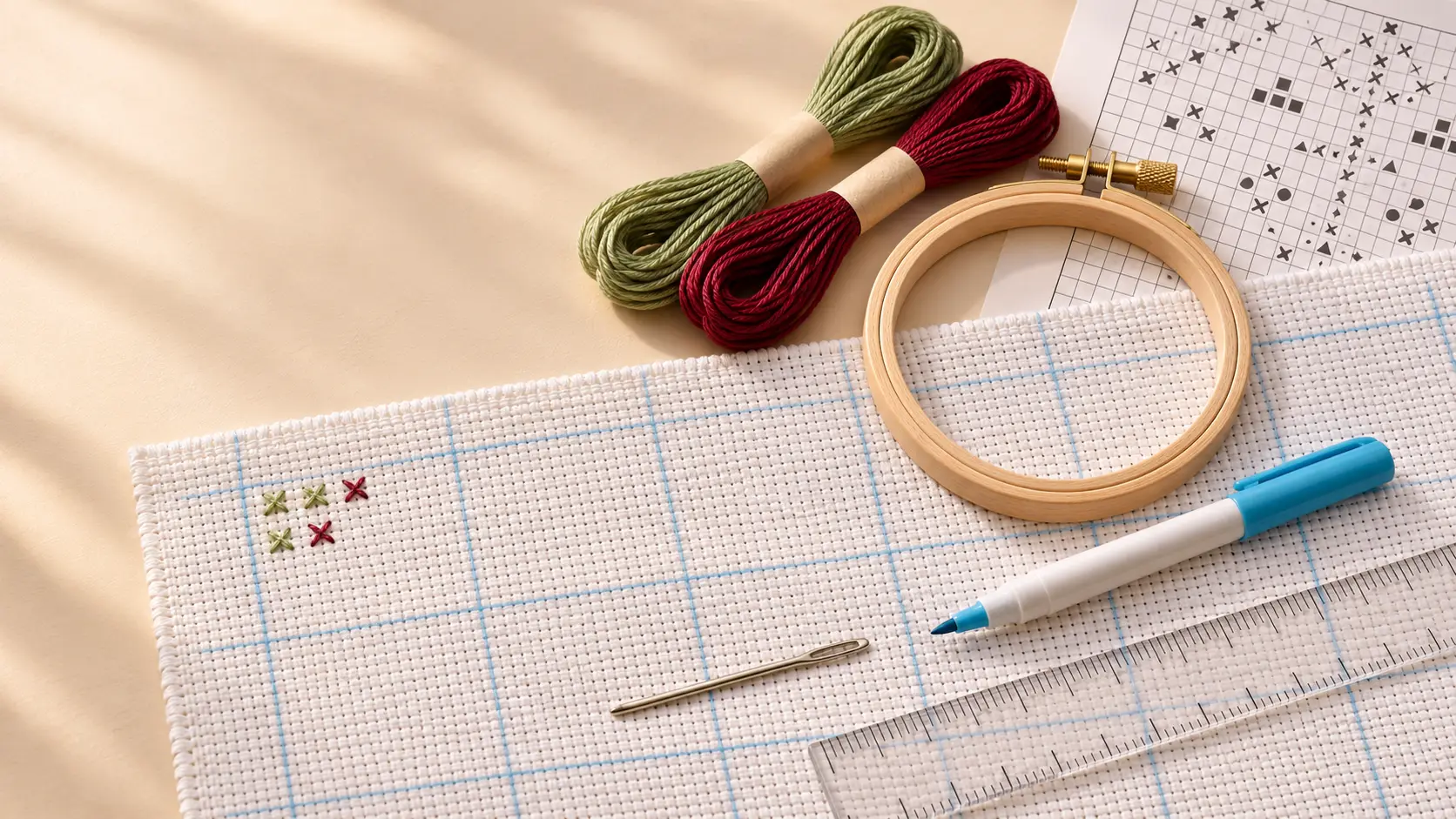
 Make a Coverage Test
If you’re uncertain, stitch a small sample.
Try several Xs using:
- one strand,
- two strands,
- three strands.
Look at them from normal viewing distance.
Don’t judge only through magnification.
Ask yourself:
Do I like the fabric showing through?
Do the stitches look too bulky?
Can the thread pass through completed areas comfortably?
Does the pattern rely on a delicate or substantial texture?
Five minutes of testing can prevent hours of second-guessing.
 Cross Stitch Expo Recommendation
Treat the pattern as your primary instruction.
Treat common strand-count charts as starting references.
Then use your eyes.
Cross stitch is both counted and visual.
The “correct” number of strands should produce the appearance the design intends while remaining comfortable to stitch.